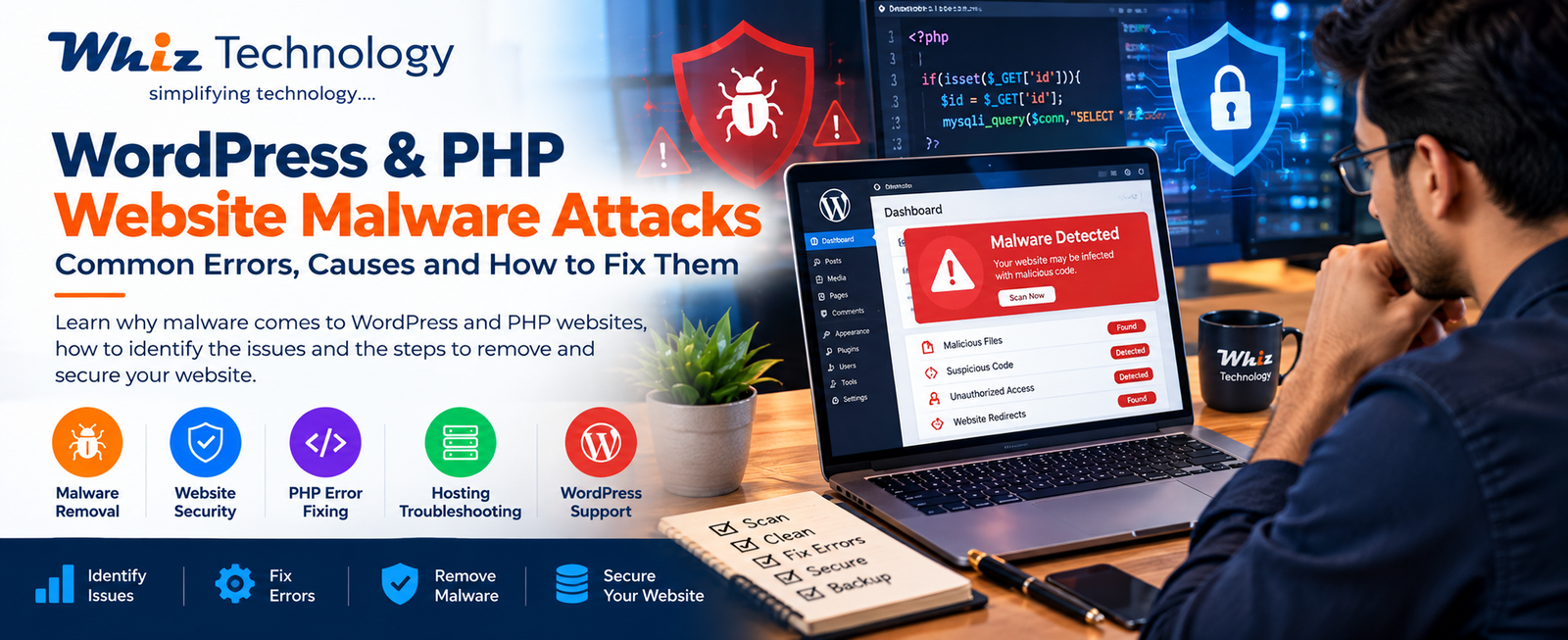
Introduction Website malware infections are a serious security concern for businesses operating WordPress and PHP-based websites. A malware infection can affect website performance, redirect visitors to suspicious pages, inject unwanted advertisements, modify website files, or cause a website to become inaccessible. Many website owners initially notice unusual symptoms such as a sudden increase in spam pages, unexpected redirects, browser security warnings, or errors appearing on their websites. These issues may result from compromised administrator credentials, vulnerable plugins, outdated themes, insecure file permissions, or malicious code uploaded to the hosting account. At Whiz Technology, website security troubleshooting involves identifying the source of the infection, examining suspicious files, resolving technical errors, and implementing preventive security measures. This article explains common WordPress and PHP malware symptoms and the technical steps involved in resolving them. What Is Website Malware? Website malware refers to malicious code or software that has been introduced into a website or its hosting environment without authorization. It may affect WordPress core files, themes, plugins, PHP scripts, databases, or other website components. Depending on the infection, malware may be designed to: Not every website error indicates malware. A proper technical investigation is necessary to distinguish security incidents from configuration, compatibility, or hosting problems. Common Signs of Malware Infection in WordPress and PHP Websites 1. Unexpected Website Redirects One common symptom is automatic redirection to unfamiliar websites. For example, visitors may enter the correct business website URL but get redirected to unrelated pages. Possible investigation areas include: 2. WordPress White Screen of Death A website may display a blank white screen instead of its normal content. Possible causes include: The PHP error log should be examined before making changes. 3. 403 Forbidden Error A 403 error indicates that the server is refusing access to a requested resource. Potential causes include: A 403 error is not automatically evidence of malware. 4. 500 Internal Server Error A 500 error can occur when the server encounters an unexpected condition. Common causes include: Check the server’s error logs to identify the actual failure. 5. Suspicious Files in the Hosting Account During a malware investigation, administrators may discover unfamiliar PHP files or unexpected modifications to existing files. Suspicious indicators can include: File names alone are not sufficient to establish that a file is malicious. Compare files against trusted software distributions and investigate their behavior. How Does Malware Enter WordPress and PHP Websites? Outdated WordPress Plugins and Themes Unpatched software may contain security vulnerabilities that attackers can exploit. Regularly updating WordPress core, themes, and plugins helps reduce exposure to known vulnerabilities. Weak Administrator Passwords Weak or reused passwords increase the risk of unauthorized account access. Use strong, unique credentials and enable multi-factor authentication wherever possible. Insecure Hosting Configuration Incorrect file permissions, exposed configuration files, and poorly isolated hosting accounts can increase security risks. Compromised FTP or Hosting Credentials If hosting or FTP credentials are stolen, an attacker may be able to modify website files directly. Infected Third-Party Components Untrusted themes, plugins, or software obtained from unofficial sources may contain malicious code. Use verified software sources and remove components that are no longer required. Step-by-Step Process to Remove WordPress Malware Malware removal should be performed carefully to avoid destroying evidence, losing data, or leaving hidden persistence mechanisms. Step 1: Take a Complete Website Backup Before making changes, create a backup of: Store a copy outside the affected hosting environment. If the website is actively harming visitors, coordinate temporary containment with the hosting provider. Step 2: Identify the Infection Source Review: The objective is to identify both the infected files and the likely entry point. Step 3: Scan Website Files Use a reputable security scanner or hosting malware detection facility. Compare WordPress core files with clean versions of the same WordPress release. Investigate suspicious PHP scripts rather than deleting files solely because their names appear unfamiliar. Step 4: Clean or Replace Infected Files For verified infections: Custom PHP applications should be reviewed separately to avoid removing legitimate business functionality. Step 5: Inspect the WordPress Database Malicious content may remain in the database even after infected files are removed. Review: Create a database backup before performing cleanup operations. Step 6: Reset Credentials After containment and cleanup, rotate relevant credentials: Revoke unauthorized sessions and accounts. Step 7: Verify Website Functionality After cleanup, test: Monitor the website after restoration to detect possible reinfection. How to Prevent Future Malware Attacks Website security requires ongoing maintenance rather than a one-time cleanup. Recommended practices include: For PHP applications, also maintain supported PHP versions, validate user inputs, use secure database queries, and protect sensitive configuration files. When Should You Contact a Website Security Professional? Professional assistance may be required when: A comprehensive investigation should address the infection source, affected components, restoration, and preventive controls. How Whiz Technology Helps Resolve WordPress and PHP Website Issues Whiz Technology provides website development, technical troubleshooting, maintenance, and security-related support for WordPress and PHP-based websites. Our website troubleshooting services cover: Our technical approach focuses on identifying the underlying issue rather than applying temporary fixes that may leave the original problem unresolved. Conclusion Malware infections can affect website availability, functionality, customer trust, and business operations. For WordPress and PHP websites, effective resolution requires identifying the infection source, examining affected files and databases, restoring trusted components, securing credentials, and monitoring the environment. Regular updates, secure hosting practices, and reliable backups can help reduce the risk of future incidents. If your website is showing unexpected redirects, suspicious content, PHP errors, or possible malware activity, a structured technical investigation is an important first step. Need Help With WordPress or PHP Website Errors? Connect with Whiz Technology for website troubleshooting, maintenance, and security support. Website: https://whiztechnology.in/Phone: +91 9560322639Email: info.whiztechnology@gmail.com Whiz Technology – Simplifying Technology….

How a Professional Website Helps Small Businesses Grow in 2026
In today’s digital-first business environment, having a professional website is no longer optional for businesses that want to establish a strong online presence. Whether you operate a startup, local business, service company, or growing enterprise, your website plays an important role in connecting your brand with potential customers. A well-designed website helps businesses showcase their services, communicate their value, generate enquiries, and establish credibility. However, simply creating a website is not enough. Businesses need a responsive, user-friendly, secure, and SEO-friendly website that supports their long-term digital growth. In this guide, we will explore how professional website development for small businesses can improve online visibility, customer engagement, and business opportunities. Why Does Every Small Business Need a Professional Website? A website works as your digital business identity. Unlike social media profiles, a business website gives you greater control over your content, branding, service information, and customer experience. Here are some important reasons why businesses should invest in professional website development. 1. Build Business Credibility Customers often search online before contacting a company or purchasing a product. A professional website with clear service descriptions, business information, testimonials, and contact details helps visitors understand your business. An outdated or poorly structured website may create a negative user experience, while a professionally developed website can communicate reliability and professionalism. 2. Improve Online Visibility A website optimized for search engines can help your business appear in relevant search results. With proper SEO practices, including keyword optimization, technical SEO, structured content, and optimized page titles, businesses can improve their chances of attracting relevant organic traffic. For example, a local company may target search terms such as: A well-planned SEO strategy helps connect your services with people actively searching for them. 3. Generate More Business Enquiries Your website can function as a lead-generation platform. By integrating contact forms, WhatsApp buttons, call-to-action sections, and service enquiry forms, you can make it easier for potential customers to contact your business. Effective website development focuses not only on appearance but also on converting visitors into meaningful business enquiries. 4. Provide 24/7 Business Information Your website remains accessible even when your office is closed. Potential customers can explore your services, read your business information, review your portfolio, and submit enquiries at their convenience. This creates additional opportunities to connect with customers across different locations and time zones. Essential Features of a Business Website A successful business website combines design, functionality, performance, and search engine optimization. Mobile-Responsive Design A responsive website automatically adjusts its layout according to the visitor’s device, including smartphones, tablets, and desktops. Mobile-friendly design improves usability and supports a consistent browsing experience. SEO-Friendly Website Structure Search engine optimization should be considered during website development rather than added as an afterthought. Important elements include: Fast Loading Speed Website speed directly affects the browsing experience. Optimized images, efficient code, caching, and suitable hosting infrastructure can help improve website performance. Secure Website Infrastructure Security is important for protecting business information and maintaining customer trust. An SSL certificate, updated software, secure authentication, and regular backups are useful components of website maintenance. Clear Call-to-Action Sections Every important page should guide visitors toward a relevant next step. Examples include: Clear calls to action help visitors navigate your website and understand how to engage with your business. Which Website Platform Is Suitable for Small Businesses? The right platform depends on your business requirements, budget, scalability, and technical needs. WordPress Website Development WordPress is commonly used for business websites, blogs, service websites, and content-driven platforms. It offers content management capabilities, themes, plugins, and customization options. Custom Website Development Custom development is suitable for businesses that require specific functionality, integrations, advanced workflows, or unique user experiences. E-commerce Website Development Businesses selling products online may require an e-commerce platform with product management, payment integration, inventory management, and order processing capabilities. Choosing the right technology at the beginning can help reduce unnecessary development changes later. How SEO and Website Development Work Together Website development and SEO are closely connected. A visually attractive website may still struggle to attract organic traffic if its technical structure, content organization, and search optimization are not properly planned. An SEO-friendly website should focus on: For local businesses, location-specific service pages and an optimized Google Business Profile can also support local search visibility. Common Website Development Mistakes to Avoid Small businesses should avoid these common mistakes: A strategic website development approach helps businesses avoid these issues and create a stronger digital foundation. How Whiz Technology Helps Businesses Build Their Digital Presence At Whiz Technology, we provide digital solutions designed to support business requirements and online growth objectives. Our services include: We focus on combining professional design, functional development, and digital strategy to help businesses establish and improve their online presence. Whether you are launching a new business website or upgrading an existing platform, choosing the right development approach is an important step toward building your digital identity. Conclusion A professional website is an important digital asset for small businesses in 2026. From building credibility and improving online visibility to generating enquiries and presenting services, a well-developed website can support multiple business objectives. Investing in responsive design, SEO-friendly architecture, website security, and useful content can help create a sustainable digital foundation. If your business is planning to establish or upgrade its online presence, professional website development is a practical starting point. Build Your Business Website with Whiz Technology Ready to establish a professional online presence? Connect with Whiz Technology to discuss your website development requirements. Website: https://whiztechnology.in/Phone: +91 9560322639Email: info.whiztechnology@gmail.com Whiz Technology – Simplifying Technology….