

On-Page SEO Guide
On-Page SEO: A Complete Guide to Optimizing Your Website for Google
Want your website to attract more relevant visitors from search engines? On-page SEO is one of the essential steps toward improving your website’s search visibility, content relevance and user experience.
A website may have excellent services and attractive design, but if its pages are not properly optimized, potential customers may struggle to find it on Google.
At Whiz Technology, we help businesses improve their online presence through SEO strategies that focus on content optimization, keyword targeting, website structure and user experience.
In this guide, you will learn what on-page SEO is, why it matters, which elements you should optimize and how to build a practical on-page SEO strategy for your business website.
What Is On-Page SEO?
On-page SEO is the process of optimizing individual website pages to help search engines understand their content and help users find relevant information.
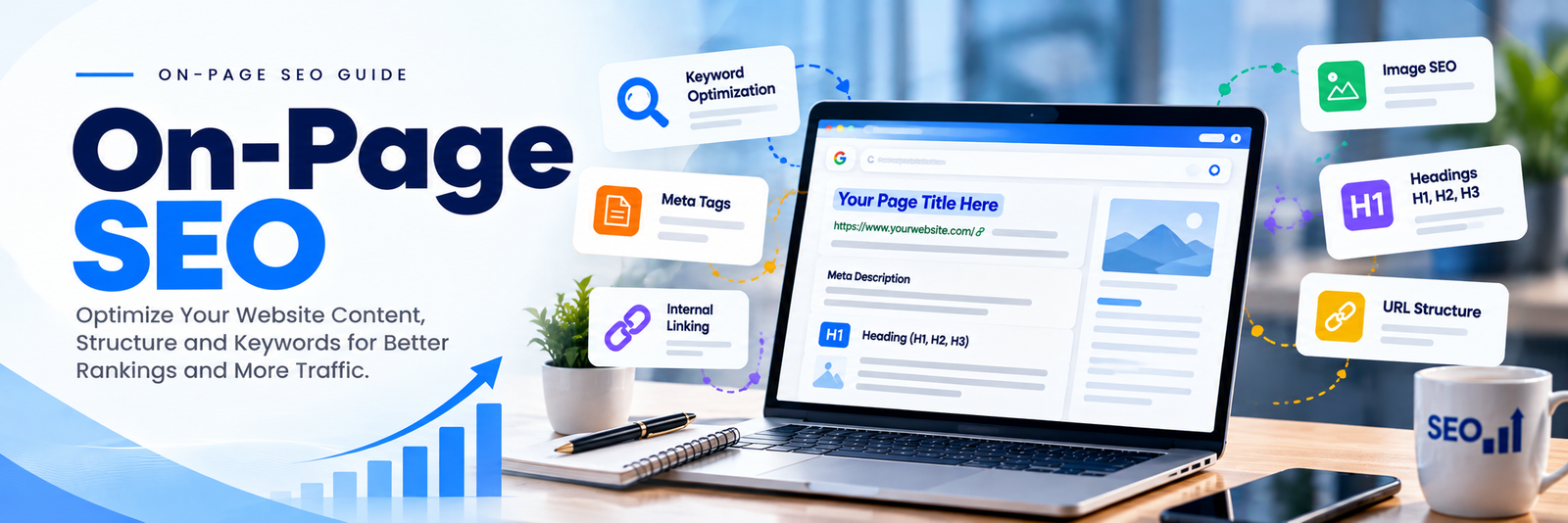
It includes optimizing page titles, meta descriptions, headings, URLs, written content, images, internal links and other elements that contribute to page relevance and usability.
Unlike off-page SEO, which focuses on external signals such as backlinks, on-page SEO primarily focuses on improvements made directly to your website.
Why Is On-Page SEO Important?
On-page SEO helps communicate what each page is about and how it addresses a user’s search intent.
Its major benefits include:
- Improved search relevance: Make your content more relevant to the topics and queries you want to target.
- Better user experience: Organize information so visitors can understand it easily.
- Clearer website structure: Help users and search engines navigate related pages.
- Stronger internal linking: Connect relevant content and important service pages.
- Improved click-through potential: Write descriptive, compelling titles and meta descriptions.
- Support for organic growth: Build a stronger foundation for your overall SEO strategy.
On-page SEO does not guarantee top rankings. Results also depend on competition, content quality, website technical health, backlinks and other search systems.
Our On-Page SEO Services
1. Keyword Research and Search Intent
Keyword research helps identify the terms people use when searching for your products, services or information.
A useful keyword strategy considers both search terms and the reason behind each search.
For example, someone searching for “what is technical SEO” probably wants an explanation, while someone searching for “technical SEO services” may be looking for a service provider.
Our keyword research process may include:
- Identifying relevant primary and secondary keywords
- Understanding informational and commercial search intent
- Reviewing related search queries
- Evaluating competitor content
- Mapping keywords to appropriate website pages
- Identifying content gaps and opportunities
Choose keywords that match the page’s actual purpose rather than adding unrelated terms simply to attract traffic.
2. SEO Title and Meta Description Optimization
The SEO title helps describe a page to search engines and users. The meta description can provide a concise summary that may appear in search results.
A good title should be descriptive, relevant and easy to understand. A meta description should communicate the page’s value without making misleading promises.
Example SEO title:
On-Page SEO Services for Better Website Visibility | Whiz Technology
Example meta description:
Improve website content, headings, meta tags, URLs and internal links with on-page SEO services from Whiz Technology.
Best practices include:
- Use the main topic naturally in the title.
- Make each page title distinctive.
- Write an accurate, useful meta description.
- Avoid keyword stuffing.
- Match the title and description to the page content.
Google may generate a different title link or search snippet based on the query and page content, so your chosen text is not guaranteed to appear exactly as written.
3. Heading Structure Optimization
Headings organize information and make pages easier to scan.
A well-structured page typically uses one clear main heading followed by logical subheadings.
Recommended structure:
- H1: Main page topic
- H2: Major sections
- H3: Supporting topics within those sections
For example:
H1: On-Page SEO Services
H2: What Is On-Page SEO?
H2: Benefits of On-Page SEO
H2: Our On-Page SEO Process
H3: Keyword Research
H3: Content Optimization
H3: Internal Linking
Use headings to describe the content that follows. Do not add keywords to every heading if they do not fit naturally.
4. High-Quality Content Optimization
Content should answer the visitor’s questions and provide information that is useful, accurate and relevant to the page’s purpose.
Our content optimization approach may include:
- Improving clarity and readability
- Covering important subtopics
- Answering common customer questions
- Removing unnecessary repetition
- Adding relevant examples and explanations
- Updating outdated information
- Including useful calls to action
Avoid publishing multiple pages that repeat essentially the same information. Each page should have a clear purpose and provide meaningful value to its intended audience.
5. SEO-Friendly URL Structure
Descriptive URLs help users understand what a page is about before visiting it.
For example:
Less descriptive:https://whiztechnology.in/page123/
More descriptive:https://whiztechnology.in/on-page-seo-guide/
Best practices include:
- Use short, descriptive URL slugs.
- Use words that reflect the page topic.
- Separate words with hyphens.
- Avoid unnecessary parameters where possible.
- Maintain a consistent website URL structure.
- Redirect old URLs appropriately if a URL must change.
Do not change established URLs without a clear reason and a suitable redirect plan.
6. Internal Linking Strategy
Internal links connect one page on your website to another page on the same website.
They help visitors discover related information and help search engines understand the relationships between pages.
For example, an article about on-page SEO can link to relevant pages about technical SEO, local SEO and SEO services.
Effective internal linking includes:
- Linking to related articles and service pages
- Using descriptive anchor text
- Connecting supporting blog posts to relevant service pages
- Making important pages easy to discover
- Fixing broken internal links
- Avoiding excessive or irrelevant linking
Internal links should help users navigate naturally rather than being added solely to repeat keywords.
7. Image SEO Optimization
Images can support content, improve understanding and contribute to a better user experience.
Image optimization includes:
- Using descriptive image file names
- Writing useful alternative text when appropriate
- Compressing image files
- Selecting suitable image dimensions
- Using modern image formats where supported
- Ensuring images display correctly on mobile devices
- Providing relevant context around important images
For example, a descriptive file name such as on-page-seo-optimization.jpg is more informative than IMG1234.jpg.
Alternative text should describe the meaningful content or purpose of an image. Avoid stuffing keywords into image descriptions.
8. Content Readability and User Experience
Visitors should be able to find the information they need without unnecessary effort.
Improve readability by using:
- Short, focused paragraphs
- Descriptive headings
- Lists where they improve clarity
- Clear explanations of technical terms
- Readable font sizes
- Good spacing between sections
- Easy-to-use navigation
- Clear contact and enquiry options
For business websites, make it easy for users to understand your services and decide what action to take next.
9. Canonical Tags and Duplicate Content Checks
Similar or duplicate URLs can make it harder to maintain a clear page structure.
Canonical tags can indicate a preferred URL among duplicate or substantially similar pages. They should be implemented consistently with the website’s intended indexing strategy.
Our on-page SEO checks may include:
- Reviewing canonical tags
- Identifying unintended duplicate pages
- Checking HTTP and HTTPS URL consistency
- Reviewing trailing slash variations
- Finding duplicate title tags
- Identifying pages with overlapping search intent
Not every similar page needs to be removed. The correct solution depends on the content, purpose and URL structure.
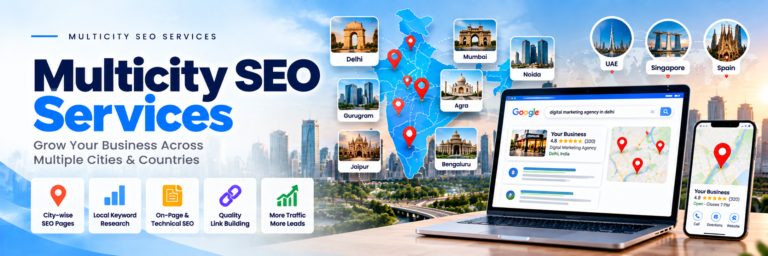
10. On-Page SEO for Local and Multicity Websites
Businesses serving different locations need relevant content that reflects their services and target audiences.
For local SEO, pages may include accurate business information, service details, contact information and relevant location references.
For multicity SEO, a scalable approach may include:
- Dedicated pages for genuinely relevant locations
- Unique and useful city-specific content
- Consistent service information
- Clear links between location and service pages
- Descriptive page titles and headings
- Accurate location details
- Appropriate internal linking
Avoid creating large numbers of nearly identical city pages with only the location name changed. Each page should offer meaningful value to visitors in that market.
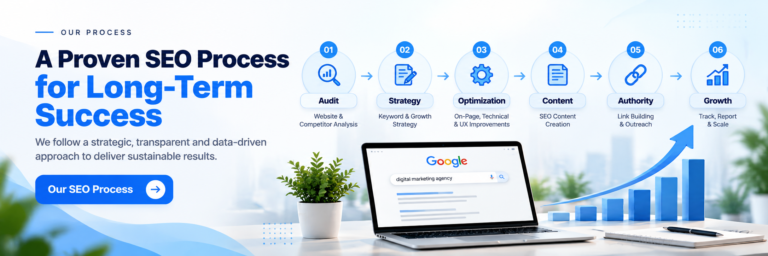
Our On-Page SEO Process
At Whiz Technology, an on-page SEO project can follow these steps.
Step 1: Website and Page Audit
Review existing content, titles, headings, URLs, internal links and other on-page elements.
Step 2: Keyword Mapping
Identify suitable target keywords and map them to relevant pages according to search intent.
Step 3: Content Optimization
Improve page structure, clarity, topical coverage and relevance to the intended audience.
Step 4: Metadata and URL Review
Optimize titles, meta descriptions and URL structures where needed.
Step 5: Internal Linking and Image Optimization
Improve navigation, contextual links, image descriptions and page presentation.
Step 6: Quality Assurance
Check the updated pages for accuracy, usability, broken links and implementation issues.
Step 7: Performance Monitoring
Use tools such as Google Search Console and suitable analytics platforms to monitor impressions, clicks, queries and organic traffic trends.
On-Page SEO Checklist
Use this checklist when publishing or updating a website page.
- The page has a clear purpose and target audience.
- The content matches the intended search intent.
- The SEO title is descriptive and relevant.
- The meta description accurately summarizes the page.
- The main heading clearly describes the topic.
- Subheadings organize the content logically.
- The page provides useful, original information.
- The URL is descriptive and appropriate.
- Relevant internal links are included.
- Images are optimized and have suitable alternative text.
- Canonical tags and indexing settings are appropriate.
- The page works well on mobile devices.
- Important links and forms work correctly.
- Search performance can be monitored after publication.
Common On-Page SEO Mistakes to Avoid
Even well-designed websites can miss important optimization opportunities.
Avoid these common mistakes:
- Keyword stuffing: Repeating keywords unnaturally can harm readability.
- Duplicate content: Publishing substantially similar pages without a clear purpose can create confusion.
- Generic titles: Vague titles may not communicate the page’s value.
- Weak internal linking: Important pages can become difficult for visitors and crawlers to discover.
- Unoptimized images: Large files can slow down page loading.
- Ignoring mobile users: Difficult navigation and unreadable content can create a poor experience.
- Publishing thin content: Pages that provide little value may not satisfy user needs.
- Changing URLs without redirects: URL changes can disrupt existing links and access to established pages.
- Overlooking search intent: A page may target a keyword but fail to answer what the searcher actually wants.
Why Choose Whiz Technology for On-Page SEO?
Whiz Technology helps businesses strengthen their online presence through website development, SEO and digital solutions.
Our on-page SEO approach focuses on understanding your website, identifying optimization opportunities and improving the elements that matter to your visitors and business objectives.
We can help with keyword mapping, metadata, content structure, internal linking, image optimization and SEO improvements for service pages, blogs and multicity websites.
Our recommendations can be tailored to your website platform, content strategy, target audience and business goals.
Frequently Asked Questions
What is included in on-page SEO?
On-page SEO can include keyword research, title tags, meta descriptions, headings, content optimization, URL structure, internal links, image SEO and canonical tag reviews.
How long does on-page SEO take to show results?
The timeframe varies depending on your website, competition, current search visibility and the changes implemented. Search engines need time to recrawl and reassess updated pages, and rankings cannot be guaranteed.
Is on-page SEO important for WordPress websites?
Yes. WordPress websites can benefit from properly structured content, optimized metadata, descriptive URLs, useful internal links and appropriately configured indexing settings.
What is the difference between on-page SEO and technical SEO?
On-page SEO focuses mainly on the content and elements of individual pages. Technical SEO focuses on the infrastructure that supports crawling, indexing, website performance and accessibility. The two disciplines work together.
Can on-page SEO help local businesses?
Yes. Relevant content, accurate business details, useful service pages and appropriate internal links can support local search visibility. Local rankings also depend on factors beyond on-page optimization.
Can on-page SEO help a multicity website?
Yes. On-page optimization can help each relevant city page communicate its services and location clearly. Pages should be useful and distinct rather than created solely by replacing city names.
Improve Your Website with On-Page SEO
A well-optimized page helps visitors understand your services and gives search engines clearer information about your content.
If your website needs better content structure, keyword targeting, metadata or internal linking, Whiz Technology can help you identify practical opportunities for improvement.
Contact Whiz Technology to discuss your on-page SEO requirements and develop an optimization strategy for your website.
Website: https://whiztechnology.in/
LET'S BUILD YOUR DIGITAL GROWTH
Discuss Your Project
→
Need Professional Digital Solutions?
Connect with Whiz Technology for website development, digital marketing, AI automation and business solutions.