E-Commerce Solutions for Modern Businesses
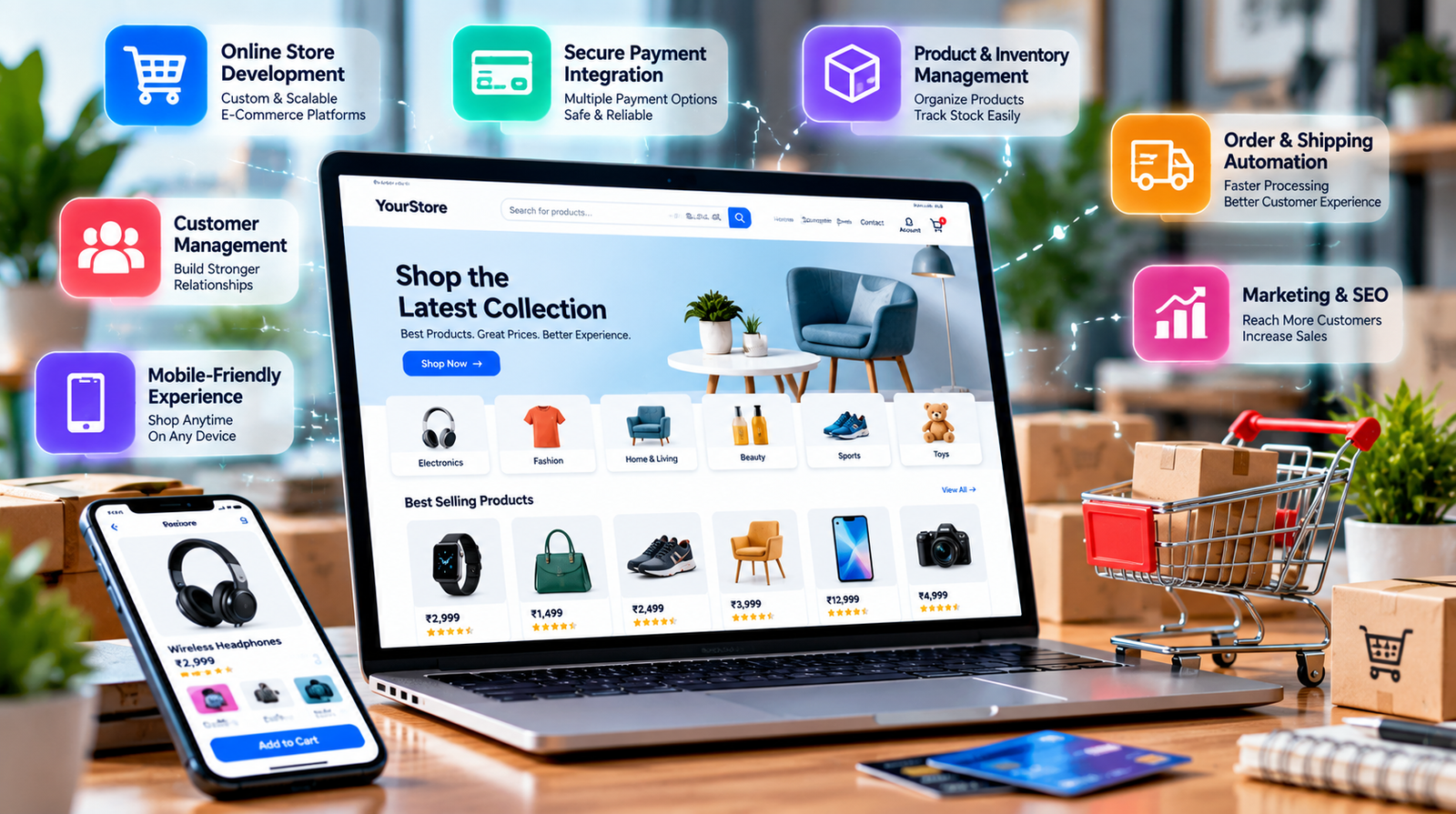
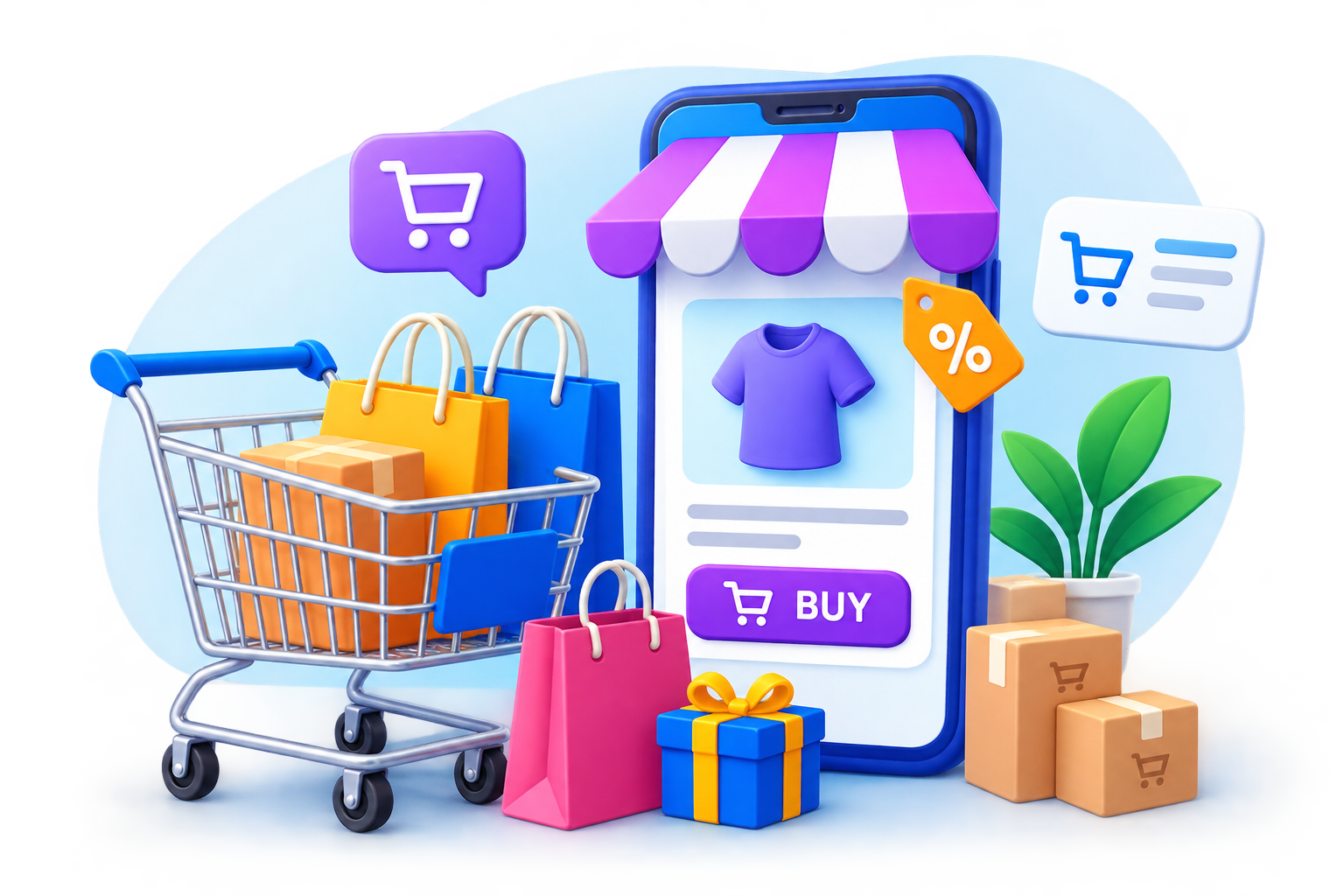
E-commerce has changed the way businesses sell products and connect with customers. With more customers researching, comparing and purchasing products online, having a reliable digital commerce platform has become an important part of modern business operations.
A well-designed e-commerce solution can help businesses showcase products, manage orders, connect with customers and create a convenient shopping experience across different devices.
What Are E-Commerce Solutions?
E-commerce solutions include the technology, tools and digital systems businesses use to sell products or services online.
Depending on the business requirements, an e-commerce platform may include:
- Product catalog management
- Shopping cart and checkout
- Online payment integration
- Order management
- Customer accounts
- Inventory management
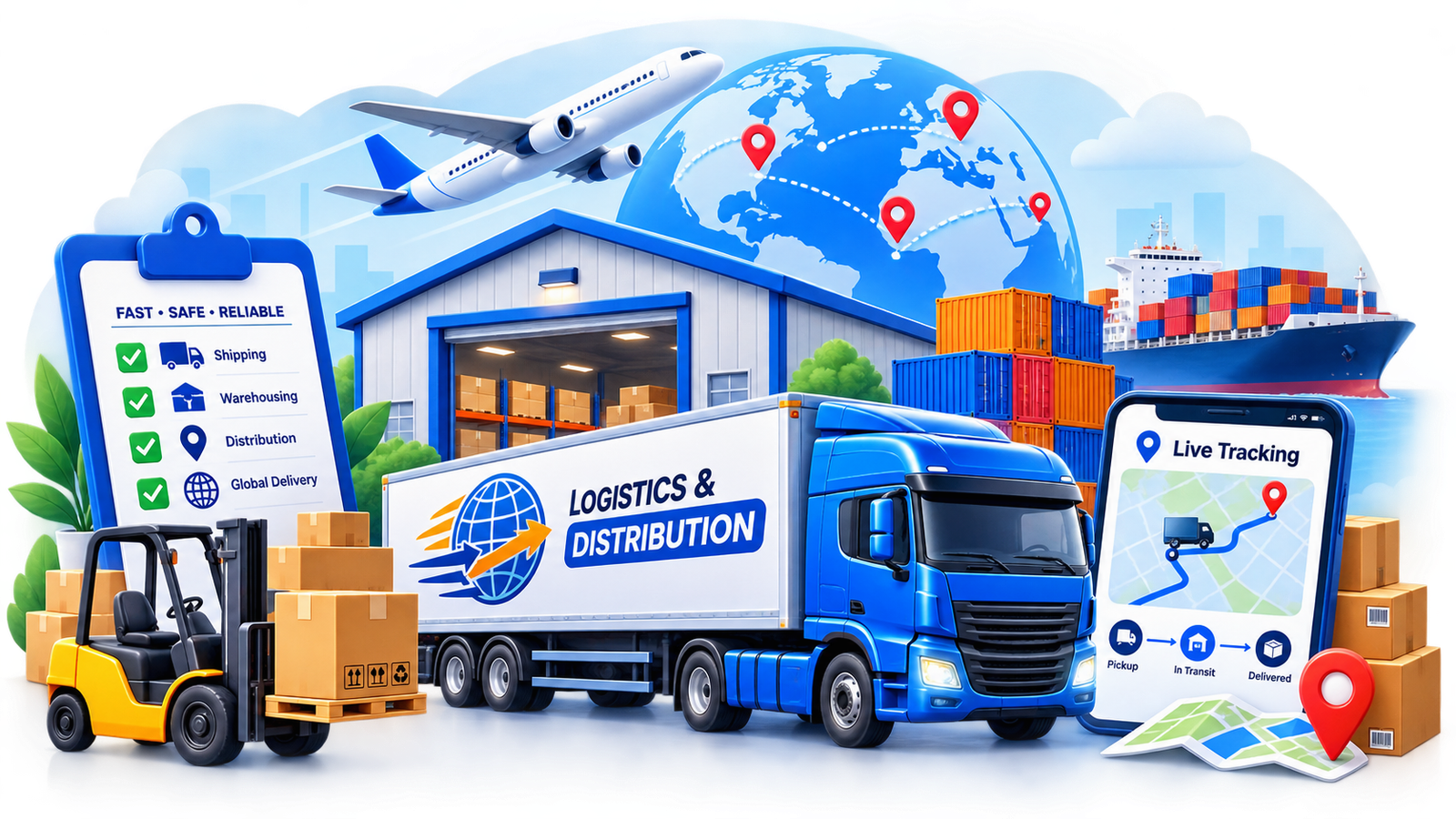
- Shipping integration
- Marketing tools
- Analytics and reporting
- Mobile-friendly shopping experiences
The right combination of these features can help businesses build a more organized and scalable online store.
Why Businesses Need a Strong E-Commerce Presence
Customers increasingly expect businesses to provide convenient ways to discover and purchase products online. A professional e-commerce website gives businesses an opportunity to present their products, communicate their value and make purchasing easier.
A strong online store can also help businesses reach customers beyond their physical location.
Key Benefits of E-Commerce Solutions
1. Reach More Customers
An online store allows businesses to showcase their products to customers beyond their local market.
With the right digital marketing strategy, businesses can attract relevant visitors from different locations and create new sales opportunities.
2. 24/7 Availability
Unlike a physical store with fixed operating hours, an e-commerce website can remain accessible to customers around the clock.
Customers can browse products, check information and place orders whenever it is convenient for them.
3. Better Product Management
Modern e-commerce platforms provide tools for managing product information, categories, prices, images and inventory.
This makes it easier for businesses to maintain an organized online catalog.
4. Convenient Online Payments
Payment gateway integration allows customers to complete purchases through supported digital payment methods.
A smooth checkout experience can reduce unnecessary steps and make online purchasing more convenient.
5. Customer Insights
E-commerce platforms can provide useful information about products, orders and customer interactions.
Businesses can use this information to understand demand, identify popular products and improve their digital strategy.
Mobile-Friendly E-Commerce
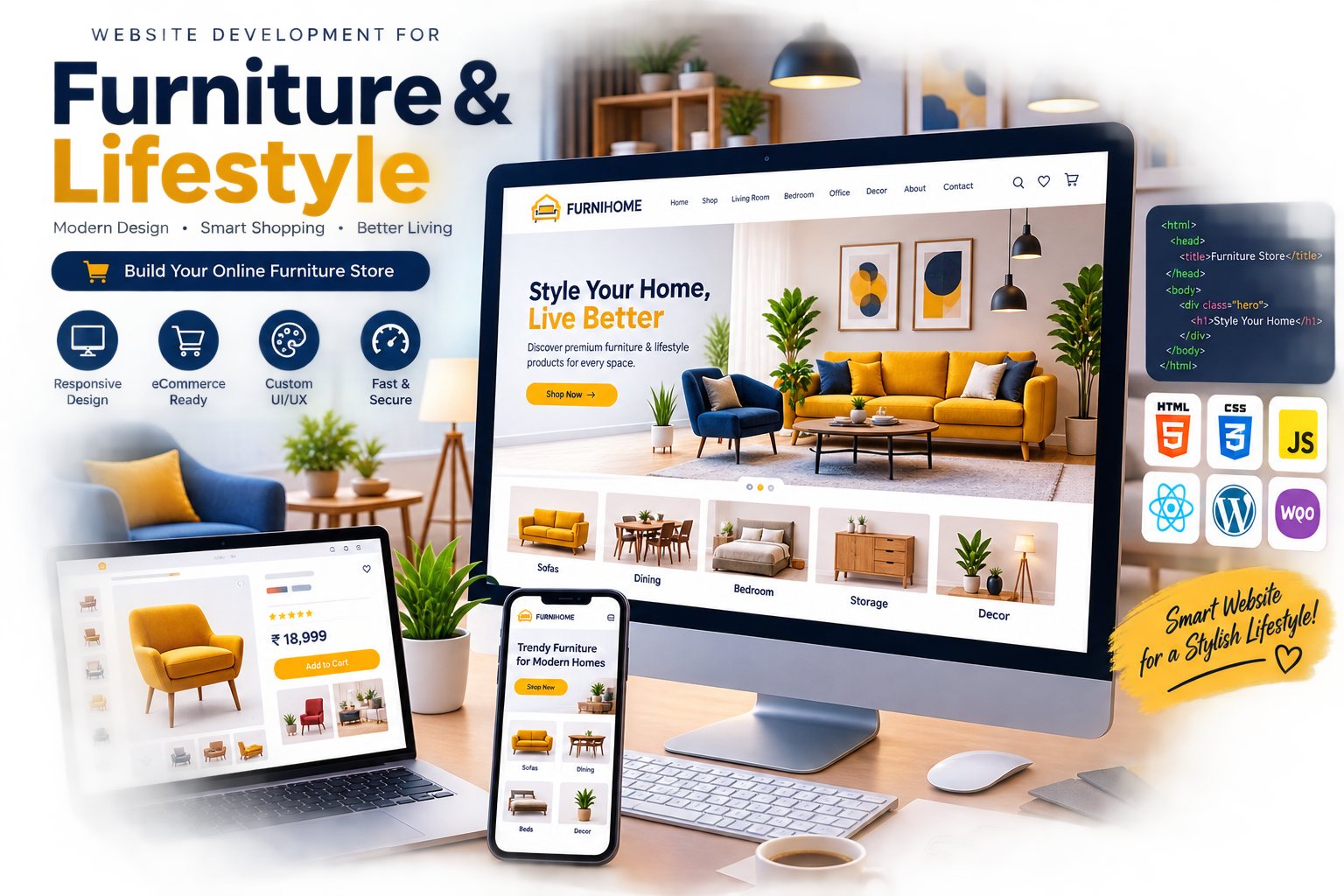
A large number of customers access websites through smartphones and tablets. For this reason, an e-commerce website should provide a responsive experience across different screen sizes.
Mobile-friendly design should make it easy for customers to:
- Browse products
- View product images
- Read product information
- Add products to the cart
- Complete checkout
- Contact the business
A simple and intuitive mobile experience can make online shopping more convenient.
E-Commerce Automation
Automation can help businesses reduce repetitive manual work.
For example, an e-commerce workflow can connect:
New Order → Payment Confirmation → Inventory Update → Customer Notification → Order Processing
Businesses can also automate selected marketing activities, customer communication and internal notifications.
This can help teams manage growing order volumes more efficiently.
E-Commerce and Digital Marketing
Building an online store is only one part of an e-commerce strategy. Businesses also need to make their products discoverable.
Search engine optimization, content marketing, social media, paid advertising and email marketing can all support an e-commerce growth strategy.
Useful product content can also help customers understand products before making a purchasing decision.
Creating a Better Customer Experience
A successful e-commerce website should focus on more than simply displaying products.
Customers should be able to quickly find what they need, understand product information, compare options and complete their purchase without unnecessary complexity.
Important elements include:
- Clear navigation
- High-quality product images
- Detailed product information
- Simple checkout
- Multiple payment options
- Clear shipping information
- Easy customer support
Choosing the Right E-Commerce Platform
Every business has different requirements. A small business may need a simple online store, while a larger organization may require advanced inventory, CRM, ERP, marketplace or custom integrations.
Before selecting an e-commerce solution, businesses should consider:
- Number of products
- Expected order volume
- Payment requirements
- Inventory management
- Shipping requirements
- Marketing integrations
- Scalability
- Security
- Future development requirements
The goal should be to select a platform that supports current needs while allowing the business to grow.
The Future of E-Commerce
E-commerce continues to evolve with technologies such as artificial intelligence, automation, personalization, mobile commerce and cloud-based platforms.
Businesses can use these technologies to create more efficient operations and improve the overall customer experience.
The focus should remain on solving real customer and business requirements rather than adding technology simply for the sake of it.
Conclusion
E-commerce solutions can help modern businesses build an online presence, reach new customers and manage digital sales more efficiently.
From product management and online payments to automation, analytics and digital marketing, a well-planned e-commerce ecosystem can support businesses as they grow.
At Whiz Technology, we help businesses develop modern e-commerce websites and digital solutions tailored to their business requirements.
Looking to build or improve your e-commerce presence? Let’s create a digital shopping experience built for your business.


LET'S BUILD YOUR DIGITAL GROWTH
Discuss Your Project
→
Need Professional Digital Solutions?
Connect with Whiz Technology for website development, digital marketing, AI automation and business solutions.