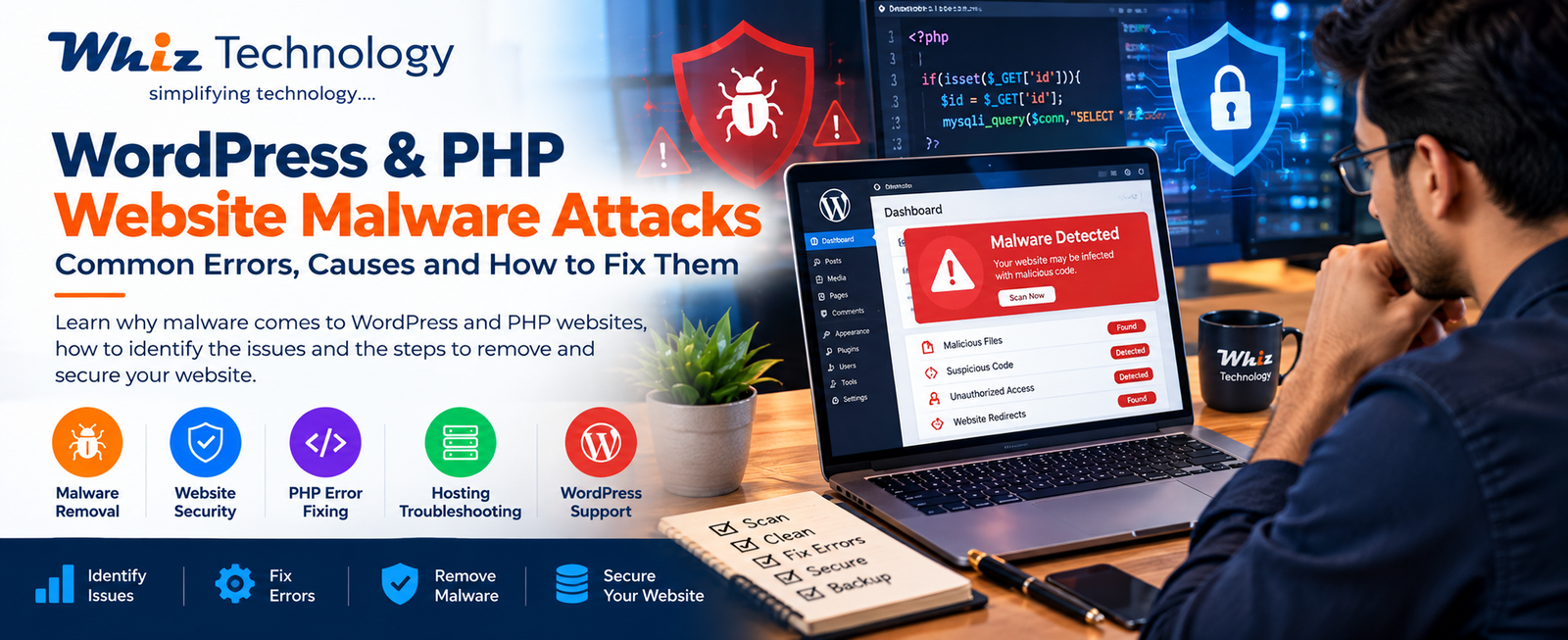
Introduction Website malware infections are a serious security concern for businesses operating WordPress and PHP-based websites. A malware infection can affect website performance, redirect visitors to suspicious pages, inject unwanted advertisements, modify website files, or cause a website to become inaccessible. Many website owners initially notice unusual symptoms such as a sudden increase in spam pages, unexpected redirects, browser security warnings, or errors appearing on their websites. These issues may result from compromised administrator credentials, vulnerable plugins, outdated themes, insecure file permissions, or malicious code uploaded to the hosting account. At Whiz Technology, website security troubleshooting involves identifying the source of the infection, examining suspicious files, resolving technical errors, and implementing preventive security measures. This article explains common WordPress and PHP malware symptoms and the technical steps involved in resolving them. What Is Website Malware? Website malware refers to malicious code or software that has been introduced into a website or its hosting environment without authorization. It may affect WordPress core files, themes, plugins, PHP scripts, databases, or other website components. Depending on the infection, malware may be designed to: Not every website error indicates malware. A proper technical investigation is necessary to distinguish security incidents from configuration, compatibility, or hosting problems. Common Signs of Malware Infection in WordPress and PHP Websites 1. Unexpected Website Redirects One common symptom is automatic redirection to unfamiliar websites. For example, visitors may enter the correct business website URL but get redirected to unrelated pages. Possible investigation areas include: 2. WordPress White Screen of Death A website may display a blank white screen instead of its normal content. Possible causes include: The PHP error log should be examined before making changes. 3. 403 Forbidden Error A 403 error indicates that the server is refusing access to a requested resource. Potential causes include: A 403 error is not automatically evidence of malware. 4. 500 Internal Server Error A 500 error can occur when the server encounters an unexpected condition. Common causes include: Check the server’s error logs to identify the actual failure. 5. Suspicious Files in the Hosting Account During a malware investigation, administrators may discover unfamiliar PHP files or unexpected modifications to existing files. Suspicious indicators can include: File names alone are not sufficient to establish that a file is malicious. Compare files against trusted software distributions and investigate their behavior. How Does Malware Enter WordPress and PHP Websites? Outdated WordPress Plugins and Themes Unpatched software may contain security vulnerabilities that attackers can exploit. Regularly updating WordPress core, themes, and plugins helps reduce exposure to known vulnerabilities. Weak Administrator Passwords Weak or reused passwords increase the risk of unauthorized account access. Use strong, unique credentials and enable multi-factor authentication wherever possible. Insecure Hosting Configuration Incorrect file permissions, exposed configuration files, and poorly isolated hosting accounts can increase security risks. Compromised FTP or Hosting Credentials If hosting or FTP credentials are stolen, an attacker may be able to modify website files directly. Infected Third-Party Components Untrusted themes, plugins, or software obtained from unofficial sources may contain malicious code. Use verified software sources and remove components that are no longer required. Step-by-Step Process to Remove WordPress Malware Malware removal should be performed carefully to avoid destroying evidence, losing data, or leaving hidden persistence mechanisms. Step 1: Take a Complete Website Backup Before making changes, create a backup of: Store a copy outside the affected hosting environment. If the website is actively harming visitors, coordinate temporary containment with the hosting provider. Step 2: Identify the Infection Source Review: The objective is to identify both the infected files and the likely entry point. Step 3: Scan Website Files Use a reputable security scanner or hosting malware detection facility. Compare WordPress core files with clean versions of the same WordPress release. Investigate suspicious PHP scripts rather than deleting files solely because their names appear unfamiliar. Step 4: Clean or Replace Infected Files For verified infections: Custom PHP applications should be reviewed separately to avoid removing legitimate business functionality. Step 5: Inspect the WordPress Database Malicious content may remain in the database even after infected files are removed. Review: Create a database backup before performing cleanup operations. Step 6: Reset Credentials After containment and cleanup, rotate relevant credentials: Revoke unauthorized sessions and accounts. Step 7: Verify Website Functionality After cleanup, test: Monitor the website after restoration to detect possible reinfection. How to Prevent Future Malware Attacks Website security requires ongoing maintenance rather than a one-time cleanup. Recommended practices include: For PHP applications, also maintain supported PHP versions, validate user inputs, use secure database queries, and protect sensitive configuration files. When Should You Contact a Website Security Professional? Professional assistance may be required when: A comprehensive investigation should address the infection source, affected components, restoration, and preventive controls. How Whiz Technology Helps Resolve WordPress and PHP Website Issues Whiz Technology provides website development, technical troubleshooting, maintenance, and security-related support for WordPress and PHP-based websites. Our website troubleshooting services cover: Our technical approach focuses on identifying the underlying issue rather than applying temporary fixes that may leave the original problem unresolved. Conclusion Malware infections can affect website availability, functionality, customer trust, and business operations. For WordPress and PHP websites, effective resolution requires identifying the infection source, examining affected files and databases, restoring trusted components, securing credentials, and monitoring the environment. Regular updates, secure hosting practices, and reliable backups can help reduce the risk of future incidents. If your website is showing unexpected redirects, suspicious content, PHP errors, or possible malware activity, a structured technical investigation is an important first step. Need Help With WordPress or PHP Website Errors? Connect with Whiz Technology for website troubleshooting, maintenance, and security support. Website: https://whiztechnology.in/Phone: +91 9560322639Email: info.whiztechnology@gmail.com Whiz Technology – Simplifying Technology….












TESTIMONIAL
Our Happy Clients Say
Whiz Technology developed our Signature Travels Online website on WordPress with custom functionality tailored to our travel business. The team understood our requirements and delivered a professional, responsive and easy-to-manage website. We are happy with the overall design, functionality and support.

Signature Travels
Director
Whiz Technology provided us with a professional and modern website solution for Sunny Overseas. The team understood our restaurant furniture business requirements and created a clean, user-friendly website that effectively showcases our furniture products and services. We appreciate their creative approach, technical expertise and continued support.

Sunny Overseas Team
Whiz Technology created a modern and professional website for PalettePro that beautifully represents our interior design expertise and creative work. The website is visually appealing, responsive and easy for our clients to explore. We are very happy with the overall work and support.

PalettePro Team
Whiz Technology created a modern and professional WordPress website for Nawab Furniture with custom PHP functionality. The website beautifully showcases our residential furniture products and provides our customers with a smooth browsing experience. We are very satisfied with their work and support.

Nawab Furniture Team
Whiz Technology developed a modern and professional website for PMS Dukaan, creating a smooth platform to present PMS and AIF data, analysis and investment insights. We appreciate their technical expertise, attention to detail and support.

pmsdukaan
Whiz Technology created a modern and professional website for CoachingMotto Institute with a clean, responsive and student-friendly experience. We are very happy with their design, development and support.

Coaching Motto Institute
Whiz Technology delivered an excellent digital solution for AICOM INSUTECH INDIA. Professional team, great communication, and quality work.

Aicom Insutech India
I.P. Singh Makkar
I had the pleasure of working with Whiz Technology for our website development needs, and the experience has been nothing short of outstanding. From conception to execution, their team demonstrated unparalleled expertise and creativity in crafting a website that exceeded our expectations.

Janta Medical
Whiz Technology developed a professional WordPress website for TravelMotive that perfectly represents our tour and travel business. The website is modern, user-friendly and easy to manage. We appreciate their quality work and support.

Travel Motive
Founder
Whiz Technology did an excellent job developing the RideOn India website. They understood our requirements, created a professional and user-friendly platform, and provided excellent technical support throughout the project. We are very satisfied with their work and highly recommend Whiz Technology.

RideOn India
Delhi
Whiz Technology delivered a modern, fast and professional website for HawaBaaz News Media. We’re very happy with their design, functionality and overall support.

HawaBaaz Team
INDUSTRIES WE SERVE
Website Development for Every Industry
We create modern, scalable and industry-focused websites tailored to the unique needs of your business.

Retail & E-commerce
Modern e-commerce websites and digital solutions for retailers, online stores, product brands and growing businesses.
Explore More →
Education & E-Learning
Smart educational platforms and e-learning solutions designed for modern learning and digital education.
Explore More →
Healthcare & Fitness
Modern healthcare and fitness platforms designed to improve care, wellness and customer engagement.
Explore More →
Logistics & Distribution
Smart logistics solutions designed to streamline transportation, distribution and delivery operations.
Explore More →
Social Networking
Powerful social platforms that connect users and create active communities.
Explore More →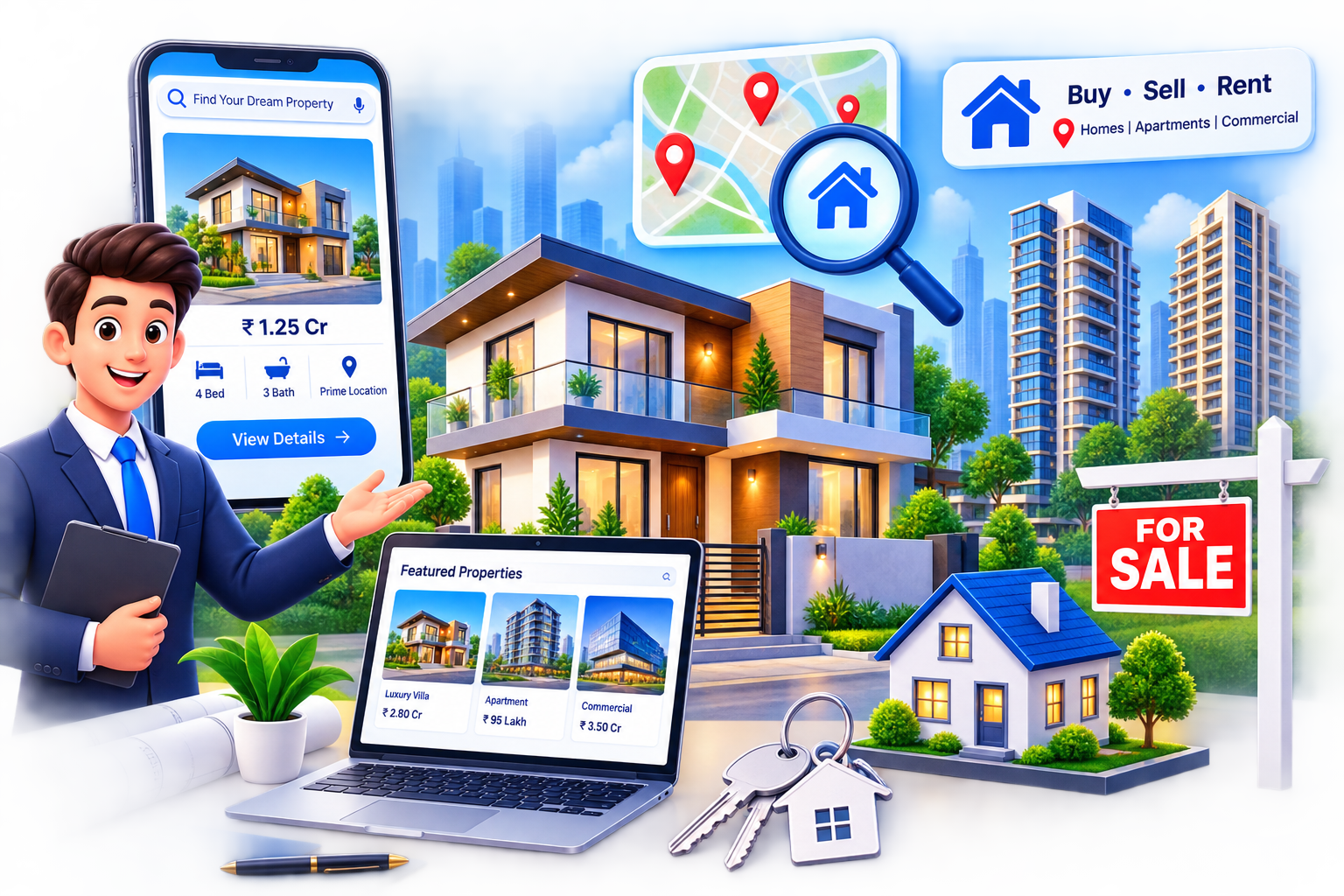
Real Estate & Property
Professional real estate websites built to showcase properties, promote projects and generate quality enquiries.
Explore More →
Travel & Hospitality
Travel websites designed to showcase destinations, simplify bookings and grow businesses.
Explore More →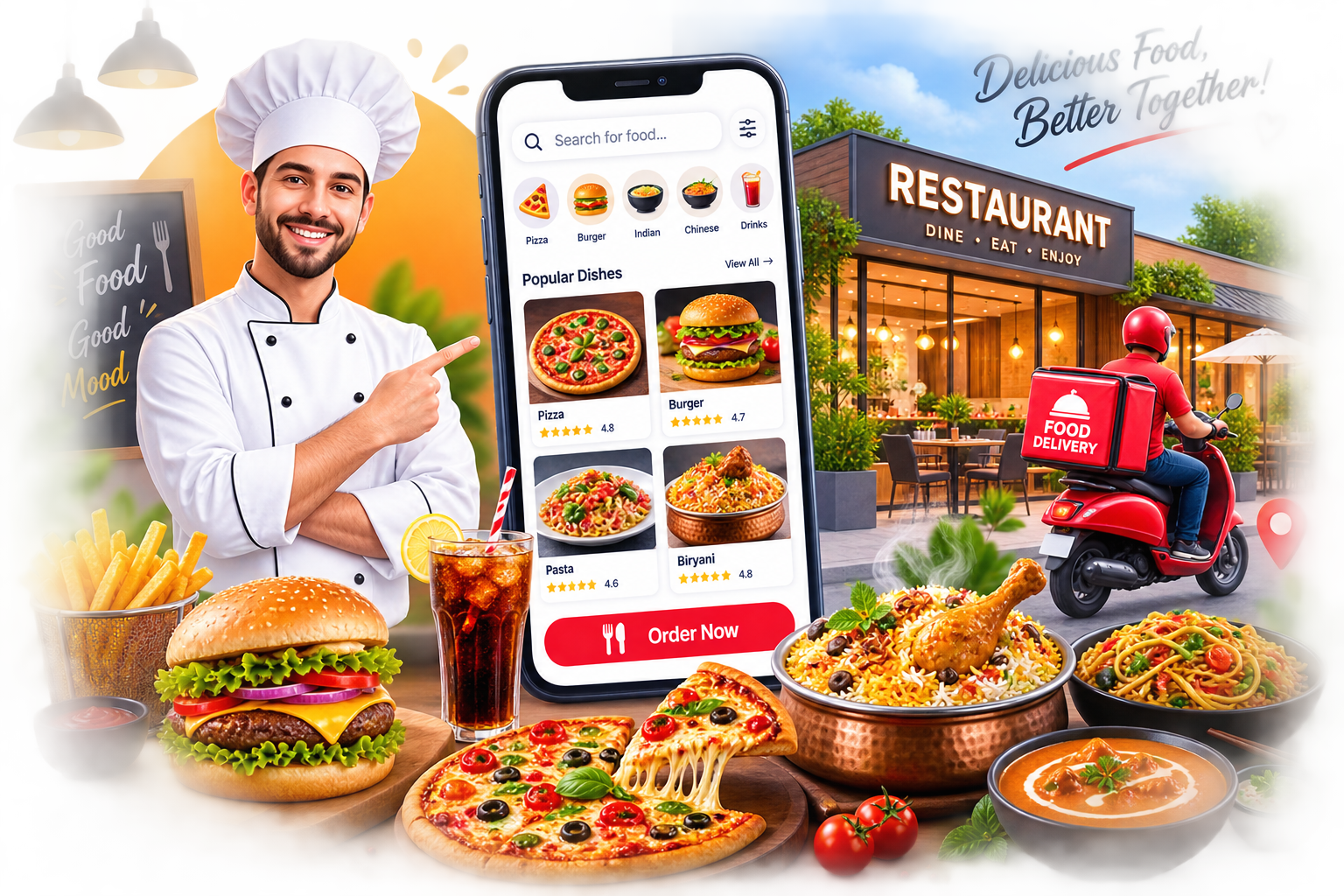
Food & Restaurant
Modern restaurant websites and digital solutions designed to attract customers and grow your food business.
Explore More →
Interior & Decor
Beautiful interior and decor websites that reflect creativity and style.
Explore More →
Furniture & Lifestyle
Furniture and lifestyle websites that showcase quality and inspire customers.
Explore More →
Whiz Technology
Simplifying Technology...

LATEST CASE STUDY
Latest Case Study
Discover our latest project, technology and digital solution.
READ CASE STUDY →